Add Row
Add Element
cropper
update
Pro Home Guides
update
Add Element
  • Home
  • Categories
    • Home Design & Inspiration
    • Home Renovation & Project Planning
    • DIY Home Improvement & Repairs
    • Pro Contractor Insights & Business Growth
    • Technical Tips & Best Practices
    • Outdoor Living
March 21.2025
3 Minutes Read

How AI-Based Document Review is Revolutionizing Construction Efficiency

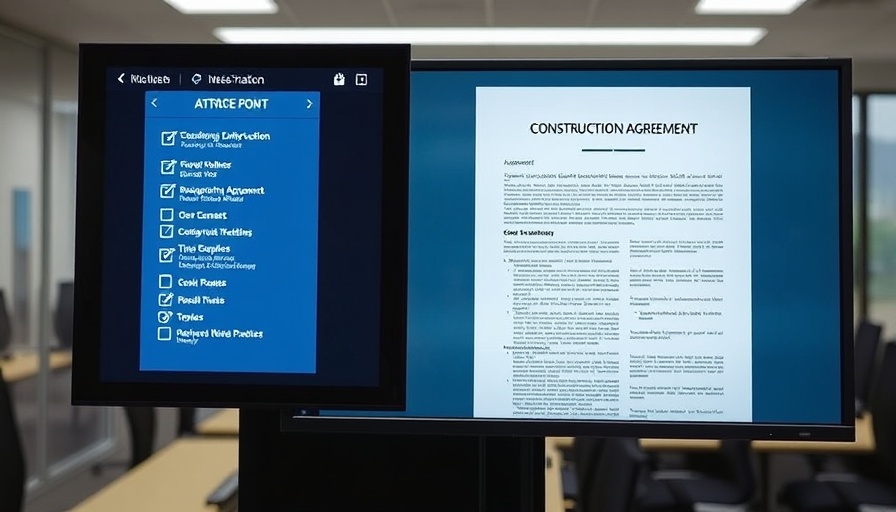
AI-based document review in construction with checklist and agreement visible.

The Future of Construction: AI and Document Review

The construction industry is embracing a technological evolution, with companies like The Boldt Co. leading the charge in standardizing AI-based document review processes. The integration of AI platforms like Document Crunch not only streamlines operations but also enhances accuracy in the handling of important project documents, leading to fewer mistakes and better project outcomes.

Understanding AI’s Role in Document Management

In a sector renowned for its complexity and need for precision, AI serves as a transformative tool. By automating the review of documents, which traditionally required extensive manual labor, AI technologies reduce time constraints significantly. As a result, teams can focus more on critical aspects of projects rather than getting bogged down in the minutiae of paperwork.

Real-World Applications and Benefits

Beyond efficiency, AI-based document review platforms like Document Crunch offer substantial cost savings. According to industry estimates, 20% of project spending occurs due to errors in documentation and planning. By minimizing these errors through AI, companies can significantly cut down costs and improve overall project profits.

Building Trust Through Transparency

The Boldt Co.'s move towards AI showcases a commitment to transparency and improved communication in construction projects. As stakeholders become more informed about project statuses and changes through AI insights, trust is naturally built, paving the way for better collaborations and partnerships.

A Paradigm Shift in Contractor Relationships

This technology doesn’t just streamline operations; it also creates new opportunities for contractors. With AI tools enhancing their capacity, contractors are better positioned to showcase their expertise. By effectively communicating their abilities through documented successes and efficiency metrics provided by AI analytics, contractors can attract more clients, building a marketplace dynamic beneficial for both homeowners and service providers.

Future Predictions and Industry Trends

Looking ahead, the role of AI in document management is expected to expand further. As technology advances, we might witness even greater integrations of AI, possibly influencing contract negotiations and project planning from initial stages. Companies that adopt these technologies early stand to gain a competitive edge by positioning themselves as modern, efficient players in the construction field.

Fostering an Environment of Innovation

By standardizing AI-based document review, The Boldt Co. inspires other firms to follow suit. This shift signifies a broader acceptance of technology in construction, suggesting that the industry is ready to embrace innovation. As AI becomes integral to operations, the potential for growth and improvement is enormous. It encourages other companies to rethink their processes and consider how they, too, can benefit from technological advancements.

Conclusion: The Call to Action for Home Service Contractors

As the construction industry evolves, contractors are urged to embrace AI technologies not just for operational efficiency but as a way to enhance customer satisfaction and trust. The move towards AI is not merely about adopting new tools; it’s about creating lasting relationships through better communication and innovation. Now is the time to consider how AI can transform your business model to meet the demands of a rapidly changing marketplace.

Pro Contractor Insights & Business Growth

Write A Comment

*
*
Related Posts All Posts
12.13.2025

Infrastructure Success or Collapse? A Deep Dive into ASCE Report Insights

Update Understanding the Recent Infrastructure GainsThe American Society of Civil Engineers (ASCE) has revealed a cautiously optimistic outlook on the United States' infrastructure in their 2025 report card. The nation's overall infrastructure grade has seen an improvement from a C- to a solid C, reflecting advancements across nearly half of the evaluated sectors. This report marks the best score since the grading system began in 1998. Amidst a backdrop of unprecedented federal investment due to the 2021 Infrastructure Investment and Jobs Act, experts emphasize sustainability and long-term funding to maintain this momentum.What Factors Contributed to the Improved Grades?Notably, eight categories received higher grades, with ports leading the way with a B grade. However, despite these advancements, other areas such as stormwater and roads still languished, earning dismal D ratings. This disparity serves as a reminder of the interconnected nature of infrastructure systems; improvements in one area can hinder progress in another. The ASCE highlights how significant federal funding has laid the groundwork for these shifts forward but cautions that ongoing investment is crucial to continue this trajectory.The 2026 Funding Cliff: A Critical JunctureThe impending expiration of funding authorizations in 2026 represents a substantial risk to future infrastructure advancements. While current funding strategies have initiated a wave of improvements, ASCE warns of a $3.7 trillion shortfall looming over the next decade if funding levels do not sustain or increase. For contractors and infrastructure owners, this urgency translates into projects being prioritized to manage existing assets rather than pursuing expansive new developments.The Impact of Climate Change on Infrastructure ResilienceClimate change is increasingly influencing infrastructure strategy. ASCE identifies the adaptation to extreme weather events—which have resulted in damages exceeding $180 billion in 2024 alone—as a critical factor in planning and execution. As states like California face wildfires and the Atlantic states brace for hurricanes, building resilient structures designed to withstand these challenges is paramount. Incorporating climate resilience could marginally elevate upfront costs but is seen as essential for safeguarding financial investment and long-term operational functionality.The Workforce Challenge: Bridging the GapA pressing challenge is the widening gap between the heightened demand for services and the available labor pool. Engineers, contractors, and inspectors in construction roles face persistent shortages, exacerbated by post-COVID complications. Consequently, inadequate staffing can delay critical infrastructure projects and extend timelines adversely. This technical resource limitation is compounded by outdated asset data, which may lead to further risk aversion among agencies hesitant to proceed with projects without clear information.Lessons from the Infrastructure Report Card: Moving ForwardAs the ASCE's report reminds stakeholders, the successful continuation of infrastructure improvements rests not solely on federal funding but on efficient execution at the local level. Not all jurisdictions are equipped to handle the influx of federal dollars efficiently. The need to build a culture of preparedness and thorough planning cannot be overstated, ensuring readiness for the complexities of executing large-scale projects that require extensive coordination across departmental lines.Resilience and the Importance of Public AwarenessThe broader public must continue to be informed about the necessity of infrastructure investment in everyday lives. ASCE’s report card has proven to be a vital advocacy tool for promoting infrastructure awareness and influencing policymaking at multiple levels of government. By understanding that continuous investment in infrastructure fundamentally contributes to economic stability and public welfare, communities can make strategic choices for their future investments effectively.Conclusion: A Call to ActionMaintaining an upward trajectory in U.S. infrastructure development will require collective action—policymakers, contractors, and communities must unite to advocate for continued investment beyond the current funding cliff. Together, we can build a resilient and efficient infrastructure system that not only addresses present demands but also anticipates future challenges.

12.13.2025

The 2026 Honda Pioneer 700: A New Era of Versatile Utility Vehicle

Update Introducing the Upgraded 2026 Honda Pioneer 700: A Marvel of Utility and Versatility The latest model of the Honda Pioneer 700 is here, and it's ready to impress not just worksite enthusiasts but also outdoor adventurers. Known for its durable design and agility, the Honda Pioneer 700 continues to evolve, with the newly released 2026 model showcasing innovative features and enhanced specifications. As a versatile utility vehicle built for functionality and comfort, the Pioneer 700 provides a compelling option for homeowners and contractors alike. Key Features that Enhance Convenience Honda has refined the 2026 Pioneer 700 with several upgrades that speak to both work efficiency and recreational needs. A significant change is the expanded under-dash storage, upgraded from a minimal 3.9 liters to a substantial 10 liters in all trims. Virtual storage capabilities are boosted, adding convenience for users on the go. Among these refinements, the addition of a sealed USB-C port in the glove box enables seamless charging for electronic devices, ensuring you’re always powered up, whether on the job or trail. Performance Upgrades for All Types of Terrain The new model is outfitted with Kenda Mastodon AT tires, featuring an aggressive tread pattern designed to deliver excellent traction across various terrain types. The eight-ply-rated tires bolster puncture resistance, ensuring durability even in tough conditions. Moreover, the 2026 Pioneer introduces enhanced front guards and robust skid plates for improved undercarriage protection—essential for those navigating rugged landscapes or job sites. A Model for Every Need: Trim Levels Explained The Honda Pioneer 700 line-up caters to diverse preferences with three distinctive trims: Standard, Deluxe, and Forest. The standard version remains the most budget-friendly, while the Deluxe model upgrades include features like electric power steering and durable aluminum wheels. The Forest trim, focused on outdoor capabilities, includes a powerful 4,500-pound winch and a dedicated TrueTimber Atera camo exterior, making it the perfect companion for those who take their adventures off the beaten path. Maximizing Space: Innovative Storage Solutions An impressive feature is the introduction of under-bed compartments in the two-seat versions of the Pioneer 700, offering an additional 29.4 liters of storage space. Enhanced safety measures are also present, with storage compartments equipped with tabs for padlocks, giving users peace of mind when leaving tools or gear behind. Why the Pioneer 700 Excels in Work and Recreation The Honda Pioneer 700 stands out due to its remarkable capability, with a hauling capacity of up to 1,000 pounds and a towing capacity of 1,500 pounds. This UTV tackles heavy-duty tasks while retaining maneuverability in tight locations. Ideal for both work requirements around properties and enjoyable ride-for-pleasure outings, it’s adept at balancing utility with recreational functions. Future Trends: What Lies Ahead for UTV Users? As the UTV market evolves, manufacturers will likely continue integrating tech-forward features and sustainable practices into their designs. The Pioneer 700 exemplifies this progressive approach, providing both traditional ruggedness with modern conveniences that enhance user experience. Future iterations may lean further into electric-powered models, as consumer interest in environmentally-friendly options burgeons, which could change the landscape for utility vehicles altogether. Conclusion: Experience the 2026 Honda Pioneer 700 In reviewing the innovative upgrades and enduring reliability that the new Honda Pioneer 700 brings, it’s clear that this UTV is built to withstand both challenging work environments and fun recreational excursions. Whether you’re a contractor looking for a capable companion for tasks or a homeowner needing a trusted vehicle for property maintenance or outdoor adventures, the 2026 Pioneer 700 is equipped to meet these demands. Ready to take your outdoor and work activities to a new level? Discover how the Honda Pioneer 700 fits into your work and play scenarios today!

12.13.2025

Sublime Systems Faces Setbacks: Understanding Impacts on Low-Carbon Cement Projects

Update The Impact of Funding Cuts on the Green Cement Industry The recent pause in construction at Sublime Systems’ low-carbon cement plant in Holyoke, Massachusetts, underscores a critical moment in the green construction industry. With the abrupt cancellation of an $87 million grant from the U.S. Department of Energy (DOE), a project designed to produce low-carbon cement and generate hundreds of jobs has been thrown into limbo. As this industry pivots toward sustainable practices, the financial backing it needs is faltering, raising questions about the future of eco-friendly construction. Understanding the Current Climate for Funding In a sweeping move, the DOE terminated funding for 321 financial awards across 223 projects, all tied to states that supported Vice President Kamala Harris in the 2024 election. This decision, claimed to save over $7.5 billion, highlights a shift in federal priorities that could disrupt the momentum of sustainable projects nationwide. For companies like Sublime Systems, which eagerly anticipated turning their plans into reality with government support, such decisions create unexpected hurdles. The anticipated Holyoke plant was set to produce up to 30,000 tons of low-carbon cement annually and hoped to open by 2026. Challenges Faced in the Construction Sector This funding setback is emblematic of the broader issues faced by the construction industry. Economic conditions have been rocky, influenced by administrative changes and government shutdowns that have resulted in uncertainty regarding project funding. The mixed signals from the government about infrastructure and energy funding complicate the construction landscape, leaving companies scrambling for alternative sources of capital. Projects that had been in the pipeline, with the promise of green technology and job creation, are now stalled, leaving employees and stakeholders anxious about the future. Looking Ahead: Potential Alternatives for Growth Despite these setbacks, Sublime Systems has not given up hope. The company remains engaged in discussions with the DOE and is exploring a variety of alternative plans to keep their vision for the first commercial plant alive. As they navigate through these challenges, they are also emphasizing their commitment to reducing emissions in the construction sector. The company’s partnership with Microsoft, which signed a deal to buy significant amounts of low-carbon cement, suggests that there is still demand for green building materials — if only they can stabilize their financial foundation. Emotional and Community Perspectives The local impact of Sublime’s halt on construction resonates deeply within the community. With hundreds of potential jobs at stake, the pause in development has left many employees uncertain. Layoffs, reportedly affecting about 10% of the workforce, not only impact individuals and families but also ripple through the economy of Holyoke. This scenario harks back to common fears surrounding large-scale transitions to sustainable industries, where promise often meets unforeseen challenges. Common Misconceptions and Myths about Government Funding Many believe government grants are a reliable safety net for businesses pursuing innovative ideas. However, the suspension of funding for Sublime's plant illustrates that grants can be just as tenuous as private investment. One major misconception is that once federal support is obtained, projects are guaranteed a smooth path forward. In reality, changes in political leadership, shifts in policy, and budgetary considerations can quickly alter the landscape, forcing companies to adapt. Awareness of this reality is crucial for businesses aiming for sustainability Taking Action: Supporting Sustainable Practices As the construction industry attempts to pivot toward more sustainable practices, community support for robust policies promoting green projects becomes paramount. Voter engagement, advocating for continued funding for renewable initiatives, and aligning with organizations that prioritize sustainability are vital steps local residents can take. Support for firms that focus on reducing emissions is not only beneficial for the environment but adds long-term economic stability. In light of the funding challenges affecting Sublime Systems and the broader outlook of sustainable construction, it’s more apparent than ever that collective action can guide future initiatives. Engaging with local representatives on these issues can catalyze a renewed commitment to funding sustainable projects and ensuring that the green transition keeps making strides forward. As stakeholders in the future of construction, it’s vital to not only stay informed but to actively advocate for fair and consistent funding policies that empower companies to realize their green visions.

Terms of Service

Privacy Policy

Core Modal Title

Sorry, no results found

You Might Find These Articles Interesting

T
Please Check Your Email
We Will Be Following Up Shortly
*
*
*